Leviticus 5
Ministries > Thru the Bible with Dr. J. Vernon McGee
https://www.oneplace.com/ministries/thru-the-bible-with-j-vernon-mcgee/
Facebook Twitter Instagram YouTubeIn Leviticus 5, the trespass offering teaches us we can run to God with the worst parts of us. While confession can seem scary, it’s actually comforting. God commands confession so we can continue to have communion with Him. It’s like He’s telling the children of Israel, “Tell me everything. There’s nothing you can confess to me that I won’t forgive.”
References
Announcer: How firm a foundation, ye saints of the Lord, is laid for your faith in his excellent word.
Steve Schwetz: It's a great day to be in God's word. Welcome to Thru the Bible. I'm your host, Steve Schwetz, and as the Bible bus rolls into Leviticus chapter 5, I invite you to get your copy of God's Word and find your place, and let's get going. And while you do, our president Greg Harris is here, and he's brought some letters for us to listen to and to read together, and I trust that they're good ones, Greg.
Greg Harris: Well, they are, because this is a cool twist. They're from the United States, but they're not from English listeners.
Steve Schwetz: Yeah, and you might think, oh, well, I know he's going to talk about Spanish, a Spanish program, and yes, there is a Spanish letter in here, but the other one is one that might surprise you. It might surprise you. Yes, we are in the language of Creole. Creole, yeah. And you're going to hear a Creole letter. That's right. So you want to start with this Spanish letter? Yeah, this is from Gladys. She says, I thank God for this ministry. I began listening to it just a few months after I prayed to receive Christ through the Christian radio station Patio Pacifico in Peru in 1995. Many years have passed, but day by day the program has helped me grow spiritually, reinforcing what I was learning through the Bible studies at my church. We now live in the United States, and I still listen every morning and that same desire to grow spiritually. The teaching helps me examine my own heart and strengthens me to serve in the ministries that God has called me to. By the love, grace, favor, and abundant mercy of our Almighty God and our Lord Jesus Christ, my husband and I now serve as leaders of a marriage ministry. We testify that only he restores, filling hearts with true love, which is found in him alone. May God continue to use you so that his word reaches every nation and every language, and so that people everywhere may have a genuine encounter with our Savior.
Greg Harris: Well, this is really cool, and we hear this a lot, particularly in the Latin American Spanish ministry, that people often heard generationally. She didn't make reference to that, but people talk about the long years of Thru the Bible being available in their country. She started in Peru, then she emigrated to the United States, and here's it here. And just so you know, we have probably about 6 or 700 local stations in Latin America and the US airing TTB, and you say, Greg, you're the president, why don't you give me an exact number? The reason is a lot of them air it for free, and we don't even know. But what we do know is that your support, your faithful prayer, and the those that have given financially allow, that allows us to just keep it going for decades. And this is the fruit.
Steve Schwetz: 1995, you're looking at over 30 years in Spanish, and this woman came to Christ and gets discipled in part through the Bible 30 years ago.
Greg Harris: Yeah, you and I were young men back then. Yeah.
Steve Schwetz: For sure. Hey, we got time just for one other letter. Why don't you read it?
Greg Harris: Yeah, and we promised you're going to hear from Creole, and it's a short letter, but powerful. Eric says, I thank you very much for your ministry. To listen to it here in the USA, but in Haitian Creole, is helpful. I am able to understand more. May God never stop blessing you. And Steve, just so you know, if you go to our website, you can link to more than a hundred different language apps that you can share with people. So go to ttb.org or from our app, you can link out to more than a hundred different languages and share TTB with people here in the US and Canada in their own mother tongue.
Steve Schwetz: Yeah, it's a great way to share the gospel and share the ministry of Thru the Bible. Greg, why don't you pray for us as we begin?
Greg Harris: Father, we're just grateful that you let us fling the seed in so many languages and so many places, and we pray that as that happens again today, your spirit would work powerfully through your word. In Jesus' name, amen.
Steve Schwetz: Now it's time for our study of Leviticus 5 on Thru the Bible with Dr. J. Vernon McGee.
Dr. J. Vernon McGee: Now, as we come today to the fifth chapter of this book of Leviticus, we have found that there are five offerings that open the book of Leviticus. They are like a showcase, or they are like a display window to the book, and these five offerings set forth Christ. The first three offerings are called sweet savor offerings. We have there the burnt offering, the meal offering, and the peace offering. All speak of the person of Christ. Then we have the last two offerings, the sin offering and the trespass offering, and they are non-sweet savor offerings, and they speak of the work of Christ in connection with sin. The sin offering speaks of the fact that sin is a nature. We all have a sinful nature, a fallen nature. In fact, man is totally depraved. He has actually no capacity for God whatsoever. Now, you may think that's strong, and it is, but God makes it very clear that he just cannot, will not accept the works of a unsaved man. God is not saving the unsaved by their works. He says their righteousness is filthy rags, and that it's not by works of righteousness that he saves us by grace. But notice what he says in the 8th of Romans at verse 7: Because the carnal mind is enmity against God, for it's not subject to the law of God, neither indeed can be. It's impossible for an unsaved man to please God. The only way that we can please him, when the religious folk and that they came and said, what can we do to do the works of God? What are the works? He says, this is the work of God, that you believe on him whom he has sent. Well, that's to believe on the Lord Jesus Christ, and thou shall be saved. You and I have a sin nature, and that sin offering dealt with that. Now, the trespass offering here in chapter 5 is sin as an act. And you find out in these first few verses here, the first 13 verses, some have treated them as part of the sin offering. Well, actually, it's a sin offering because, after all, where do trespasses come from? They come because we have that kind of a nature. Now we sin because we're sinners. You don't have to wait to sin to become a sinner. You are a sinner, and that's the reason that you sin. Now we have in this trespass offering specific acts of sin that are committed in ignorance, and that's in the first 13 verses. Then you have non-specific acts of sin committed in ignorance, and that's verses 14 to 19. Now, when you come to chapter 6, you have specific acts of sin committed deliberately. So you have here the trespass offering, and then you have the law of the trespass offering over in chapter 7. Now let's look here at these specific acts of sin that are committed in ignorance. And I think probably to get into the chapter, let me read the first verse. And if a soul sin and hear the voice of swearing and is a witness, whether he hath seen or known of it, if he do not utter it, then he shall bear his iniquity. What does he mean by this? Well, first of all, let me say that there are 4 specific sins that are listed here, and the question would naturally arise, are these the only specific things that you could commit that are sin? No. These are given merely as examples. Tell the truth, I think you could have filled up the rest of the book of Leviticus with specific sins. Some preacher several years ago back east, he made up a list of sins. He had spent some time getting it together, and he had listed, I believe it was 800 specific sins. And by the way, it was just swamped with letters from people who wanted the list of sins. The fact of the matter is, they wanted the list of sins because they thought maybe there was something they were missing, and they knew they were not doing 800 things, so they wanted the list. Well, here we have 4, and the sins that are mentioned here are merely given to us as examples, and this would apply to anything that could be called a trespass. Now, we have this, if a soul sin and hear the voice of swearing. And this has been translated, if a person sin in this respect. You see, it has to do here with the hearing of an oath, whether he hath seen or known of it, if he do not utter it, then he shall bear his iniquity. You see, it's the case of a witness who does not tell all he knows. He withholds truth to the detriment of some individual. And this is a sin of omission, by the way. There are a lot of sins like that. Now, there are great many folk in church today. They come in, they think their hands are clean. They say, well, I didn't murder anybody this week, and I didn't break the speed limit, and I certainly didn't steal. But the very interesting thing is that he didn't tell all the truth, though. James put it like this in James 4:17. Therefore, to him that knoweth to do good and doeth it not, to him it is sin. You find over in 1 Kings, the 8th chapter, verse 31, this is said. If any man trespass against his neighbor and an oath be laid upon him to cause him to swear, and the oath come before thine altar in this house, then hear thou in heaven and do and judge thy servants, condemning the wicked to bring his way upon his head and justifying the righteous to give him according to his righteousness. And this is not telling the truth when you ought to tell the truth. Let me give an example of what I'm trying to say here. Here is a gossip in a little town, and she's crossing this square, the street there, and as she is, she sees one of the prominent citizens of the town, the president of the bank, who has a lovely home and a lovely wife, and she sees him crossing the street, and lo and behold, a car runs into a secretary at the bank that's crossing the street, knocks her down. And the president of the bank, he rushes over, he picks her up in his arms and takes her into a doctor's office there. And so what happens, this gossip who saw that rushes to the telephone, and she calls up the wife of the president of the bank, and she says, do you know, Madge, that I saw your husband with another woman in his arm? Now that's the truth, isn't it? I mean, by that, let me put it like this, that's the facts, but it's not the truth. You see, just withheld information. She didn't tell the whole story. There are a lot of sins of omission today. I had the experience not long ago of a group of Christian men in a meeting, and they were talking about the pastor, and they gave certain information that actually was accurate, but it wasn't the truth. They didn't tell it all. They just told part of it, and they were willing to let that group of men leave there believing that they had heard the entire truth. May I say that's a trespass. That's one of the most vicious sins that can be committed today. It's number one, by the way, on God's sin parade here that he mentions. Over in Proverbs, God says there's seven things that he hates, and number one is a lying tongue, and that's what you have here. You remember when our Lord was put on oath? When they questioned him, he kept quiet, didn't say a word. And we read in Matthew 26:63, but Jesus held his peace, and the high priest answered and said unto him, I adjure thee by the living God that thou tell us whether thou be the Christ, the Son of God. Now the Lord Jesus broke his silence. He was no longer dumb, like a sheep before his shearers. Why? He's under oath, you see. Jesus saith unto him, Thou hast said, nevertheless I say unto you, hereafter shall ye see the Son of Man sitting on the right hand of power and coming in the clouds of heaven. You see, when he's put under oath, he spoke. Now we have the second thing mentioned here. Number two, or if a soul touch any unclean thing, whether it be a carcass of an unclean beast or a carcass of unclean cattle or the carcass of unclean creeping things, and if it be hidden from him, he also shall be unclean and guilty. Now this is the law concerning uncleanness. A man may become polluted by contact with a dead animal without being aware of it, while others are witnesses. They know what he did. Now a dead carcass caused uncleanness by contact. Why was that true? Well, death, you see, is the result of sin, and the wages of sin is death, and therefore he's to keep away from that which represents sin. Now this speaks of the Christian today out in the world. A great many people, they walk down through the streets of Los Angeles. You get your eyes dirty. You can't help it in this town, besides smog, by the way, and you hear things, and you sometimes think things. May I say to you, we get unclean. Now, you can't rush into God's presence, and it may be that some of these things may be hidden from us. We may not realize it. The psalmist said in Psalm 19:12, "Who can understand his errors? Cleanse thou me from secret faults. And as we said the other day, this man always prayed and made the statement, Lord, if I've sinned, forgive me. And Mel Trotter got tired of hearing that, and he said, why don't you tell the Lord what it is? Man says, I can't think what it is. And Mel Trotter told him, says, you guess at it. And he said, you know, he hit it the very first time. I don't think you'll have much trouble, but we ought also pray, forgive us if we sin that we don't know about. And it was a trespass because it was offensive to others, and it was a transgression of the law. Whoso committeth sin transgresseth also the law, for sin is the transgression of the law. And that's one of the definitions. That's in 1 John 3:4. Now, verse 3, or if he touch the uncleanness of man, whatsoever uncleanness it be that a man shall be defiled withal, and it be hid from him when he knoweth of it, then he shall be guilty. Now, this is same as the case of an unclean animal, yet God makes a distinction between man and beast here. The penalty for this is more severe than that of the beast. Apparently, there were other distinctions of uncleanness concerning man other than death, therefore, so that you are apt to get soiled walking through this world. Now, verse 4, we have the fourth thing that's mentioned here specifically. Or if a soul swear, pronouncing with his lips to do evil or to do good, whatsoever it be that a man shall pronounce with an oath, and it be hid from him when he knoweth of it, then he shall be guilty in one of these. Now, sometimes we promise to do something, we don't do it. We forget about it. Something like this, it's rather careless. We promise that we'll serve the Lord. I think Jephthah is an example of a man promising to do something rash, to offer his daughter. That was a rash thing to do. And Simon Peter, you remember, boldly declared he would not deny Jesus, but he'd die for him. I hear people make very rash statements. I think some of our songs are dynamite, to tell the truth. I'll go with him through the garden. I see people that will sing that, and they wouldn't even come to church on Sunday night if it was foggy a little or a little sprinkle. And then they talk about going with him through the garden. That's careless speech. In fact, they're lying, doing nothing in the world but lying. I used to have a retired Methodist preacher attended my church out in Pasadena at the end of the service and give hymns like that to sing. I don't do that anymore, but I did then, and he'd always, when he'd go out and we'd had a song like that, why he'd say to me, well, you made liars out of this congregation again today. Well, if you sing those and you don't mean them, you're a liar, friends. I didn't say that. That's what God says here. And I don't think we have a right to demand that God answer our prayer. I think that's careless speech, and I think it's presumptuous, because we're told, if ye ask anything according to his will, he heareth us. Now, where'd you get the idea you can demand anything of God? And then he says here, then he shall be guilty of one of these. Well, it refers to these four things, yet there are many more that could have been included. Now, notice verses 5 and 6. It shall be when he shall be guilty in one of these things, that he shall confess that he hath sinned in that thing, and he shall bring his trespass offering unto the Lord for his sin, which he hath sinned, a female from the flock, a lamb or a kid of the goats for a sin offering, and the priest shall make an atonement for him concerning his sin. Now the offering is a sin offering, but it was because of a trespass. Now you see confession is commanded for the first time. This is the first time God said anything about it. And up to this time, of course, hasn't been secret sin. The fact of the matter is the offering was a open admission. Now it's a secret sin, and therefore today this is to be brought out in the open. You remember old Achan when he took that wedge of gold, Babyloniish garment, that had to be dealt with publicly because it was that kind of a sin. And we find here the laying on of hands in the other offerings was an admission of sin. And here, confession comes first and then the offering. See, in the sweet savor offerings, the offerings preceded any thought of confession. Now, the opposite is true here. And I think this is what our Lord had in mind in the Sermon on the Mount. He says, therefore, if thou bring thy gift to the altar and there rememberest that thy brother hath ought against thee, leave there thy gift before the altar, go thy way, first be reconciled to thy brother, then come and offer your gift. Now the believer today is to confess his sin to God privately, but make restitution to the injured party. And trespass offering just simply means offering of guilt. It was a sin offering, as all sin, you see, comes from that nature that we have today. Now we are told in verse 7, and if he be not able to bring a lamb, then he shall bring for the trespass which he's committed two turtledoves or two young pigeons. Well, this is for the poor people, but suppose he couldn't even get a bird, and he shall bring them unto the priest, he shall offer him. And then we're told here that the blood must be shed because the head of the bird had to be removed. And it reveals here that the sinner has complete forgiveness even with the little bird. But notice this, but if he be not able to bring two turtle doves or two young pigeons, then he that sins shall bring for his offering the tenth part of an ephah fine flour for sin offering. In other words, he just bring a piece of bread. That's all he'd have to bring, so that the poorest of the poor are not left out. Now you have, beginning of verse 14, non-specific acts of sin committed in ignorance. Now, there are a lot of things that are not specified. Listen to this. And the Lord spake unto Moses, saying, If a soul commit a trespass and sin through ignorance in the holy things of the Lord, then he shall bring for his trespass unto the Lord a ram without blemish out of the flocks, and so on. Now, we have here these non-specific things. This is a wrong committed through ignorance, and it has to do with robbing God in connection with tithes and offerings. This is something that I wish we could go into in detail, but we can't do that. Then we read in verse 17, and if a soul sin, commit any of these things which are forbidden to be done by the commandments of the Lord, though he wist it not, knew it not, yet is he guilty and shall bear his iniquity. Ignorance of the law excuses no one. That's true of civil law. And then verses 18 and 19, he shall bring a ram without blemish. And here again, the ram is given as the only animal for the trespass off. Now you have specific acts of sin committed deliberately. Now this is in chapter 6, the first 7 verses. We are told here, and the Lord spake unto Moses, saying, if a soul sin, commit a trespass against the Lord, and lie unto his neighbor, in that which was delivered him to keep, or in fellowship, or in a thing taken away by violence, or hath deceived his neighbor. You see, trespass is largely a sin against others. A sin against the neighbor is a sin against God. Sin against others is a sin against God. That's the reason our Lord said, therefore, all things whatsoever ye would that men should do to you, do you even so to them. This is the law and the prophets. You see, that covers all of that, and that which is taken by violence. You remember Naboth had his vineyard stolen by Ahab. What an awful thing. And he was slain. And then a little later on, you remember John says, if a man say, I love God and hateth his brother, he's a liar. You see, this has to do with a man's relationship to God. Now we'll see the law of the trespass offering when we get to chapter 7, and we'll see chapter 6 and 7 next time. Until then, may God richly bless you. To prepare your heart as we study more about these offerings, why don't you read Leviticus chapters 6 and 7 yourself, along with Hebrews 8, which tells us about our great high priest who is serving in heaven for us even now. To read ahead of every study, which I do highly recommend, why don't you download our bookmark at ttb.org or call us at 1-800-65-BIBLE, and we can have a copy sent to you by mail along with our monthly newsletter. I'm Steve Schwetz, and as always, I'm going to meet you back here next time for more great teaching and fellowship around God's Word. Thru the Bible is a 5-year study of God's entire word, and together we discover God's purposes in history and our lives, found only when we believe in Jesus Christ. Do you know him yet?
Related Episodes
Leviticus 4:13-35
Thursday, November 19
Leviticus 4:1-12
Wednesday, November 18
Leviticus 3
Tuesday, November 17
About Thru the Bible
Thru the Bible takes the listener through the entire Bible in just five years, threading back and forth between the Old and New Testaments. You can begin the study at any time. When we have concluded Revelation, we will start over again in Genesis, so if you are with us for five years you will not miss any part of the Bible.
Other Thru the Bible Programs:
Thru the Bible - Minute with McGee
Thru the Bible - Questions & Answers
Thru the Bible - Sunday Sermon
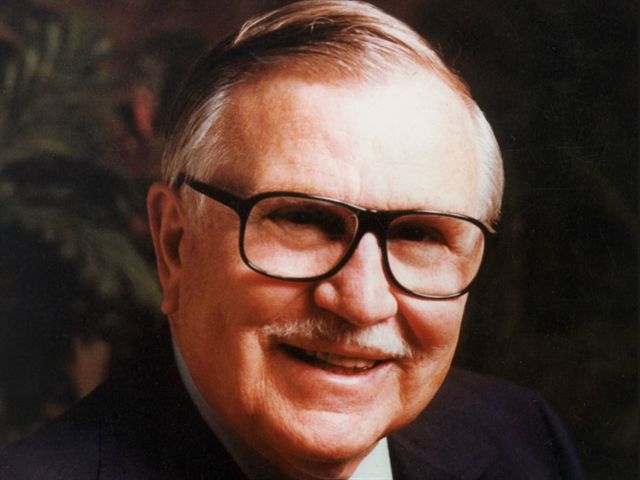
About Dr. J. Vernon McGee
John Vernon McGeewas born in Hillsboro, Texas, in 1904. Dr. McGee remarked, "When I was born and the doctor gave me the customary whack, my mother said that I let out a yell that could be heard on all four borders of Texas!" His Creator well knew that he would need a powerful voice to deliver a powerful message.
After completing his education (including a Th.M. and Th.D. from Dallas Theological Seminary), he and his wife came west, settling in Pasadena, California. Dr. McGee's greatest pastorate was at the historic Church of the Open Door in downtown Los Angeles, where he served from 1949 to 1970.
He began teaching Thru the Bible in 1967. After retiring from the pastorate, he set up radio headquarters in Pasadena, and the radio ministry expanded rapidly. Listeners never seem to tire of Dr. J. Vernon McGee's unique brand of rubber-meets-the-road teaching, or his passion for teaching the whole Word of God.
On the morning of December 1, 1988, Dr. McGee fell asleep in his chair and quietly passed into the presence of his Savior.
Contact Thru the Bible with Dr. J. Vernon McGee
Mailing Address
Thru the Bible, Inc.
P.O. Box 7100
Pasadena, CA 91109
In Canada:
Box 25325,
London, Ontario
N6C 6B1
Phone Number
(626) 795-4145 or
(800) 65-BIBLE (24253)


