Sekulow
Ministries > SEKULOW with Jay Sekulow
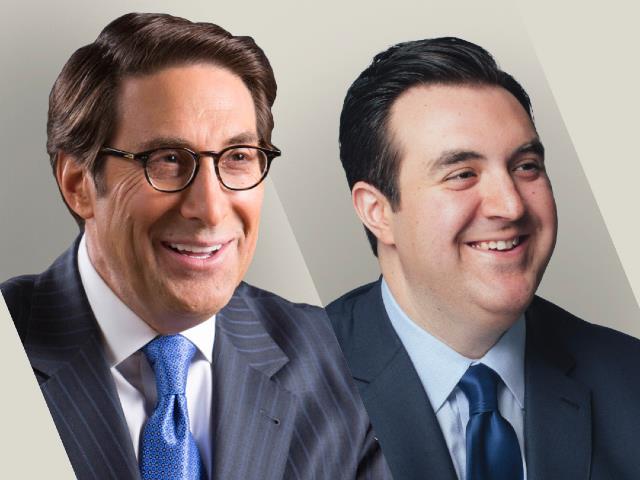
Logan Sekulow and Will Haynes discuss the Interstate Compact and what it could mean for the future of the electoral college.
Logan Sekulow: On today's show, the dark plan to upend future elections is revealed.
Announcer: Keeping you informed and engaged now more than ever. This is Seculo. We want to hear from you. Share and post your comments or call 1-800-684-3110. And now your host, Logan Seculo.
Logan Sekulow: Welcome to Seculo. We are back. It is November 5th. Hope you've had a okay 24 hours. Maybe you've recovered now from what was a pretty epic Tuesday evening. And we have a lot more to cover today. We're going to be joined by a couple of different guests. Uh one that you'll be excited about. There was a victor of the night for maybe people that are more like-minded as you. So we'll be joined by future attorney general of Oklahoma. Is that right, Will?
Will Addison: And attorney general elect. Yes.
Logan Sekulow: Elect. Yes. John Eckles will talk to them. And then of course, our friend Rick Renell will be joining us as well to just go over the fallout and everything that happened in even in LA as you got a new mayor in LA. So we'll discuss that. But again, phone lines are open for you at 1-800-684-3110. As it does seem to to be that if you want to look at always the trickle-down effect, I guess, of some of these big swing elections is maybe the intended consequences of the candidates and maybe the unintended consequence of the voter. And that is a plan to remove the effects of the Electoral College. This is something we've been talking about for years. We've been educating even children of the importance of the Electoral College and why it was set in place the first way. And of course, a lot of it has to do with maybe you are in Minnesota. Maybe you are in some of those quote-unquote flyover states and you'd like to be represented. Well, if you don't have an Electoral College, too bad. California and New York pretty much control your country now just due to populist base. But this is a unique way that they're talking about not just doing away with the Electoral College, keeping it on paper in existence, but being able to remove the broader effect of the Electoral College.
Will Addison: That right. This is something that I've been warning about and concerned about for quite some time. This has been an issue that we've seen bubble up for years as this this idea called the National Popular Vote Interstate Compact, NPVIC, is what it's referred to. And this is a compact among states where they're agreeing that if they get enough electoral votes combined, so 270 to win the presidency, if they get enough electoral votes combined, they will no longer cast their electoral votes for who won their state. So if you're in Tennessee and they had signed on to this, which they have not, then it would be all those electoral votes go to who won the popular vote of the country. This is a backdoor way to get around what it is is a creation of our founders, the Electoral College, the electoral system that we have and to go to a popular vote. This has been something that has been the the dream of the left since really a long time, but the 2020 or the 2000 election with George W. Bush when that was so much chaos there that they have decided and tried to find a way to go about it. That's why the media harps on the well, the popular vote and Hillary Clinton and the popular vote because they're trying to get it in people's heads
Logan Sekulow: The 2000s really That's kind of Yeah.
Will Addison: that this is what you want.
Logan Sekulow: Yeah, not to mention the last time President Trump won both the popular vote and the Electoral College, which happens the majority of the time. There has just been a few times like George W. Bush in more recent history, I said 2000 where that first kind of became an issue we all started to really take a notice to. Again, that was sort of one of the first times we ever voted. So that could or we didn't even vote that time. We weren't even old enough to vote for that first one. But then the next time obviously with Donald Trump.
Will Addison: Well, and here's why this matters now. Why today just after this blue wave election could this be something that now being talked about again? They already have enough states, 18 states and DC, to make up 222 electoral votes. The Democrats just won five more governorships in both houses of a state legislature. So a trifecta in the state
Logan Sekulow: No longer a theory.
Will Addison: that could get them a total of 61 more, which would put them over the line. And therefore, you no longer have the Electoral College in practice in this country. We're going to talk about the implications and even the legality of it as we come up.
Logan Sekulow: Yeah, maybe we'll break it down a little bit more in human terms so you can fully understand and grasp the reasons why this is happening. Phone lines are open at 1-800-684-3110. And of course, ACLJ, we've kicked off our Stand Strong campaign. We need you more than ever. Go to aclj.org.
Will Addison: Across our nation, the principles that have shaped America for generations are being attacked. The lives of innocent unborn babies are still in jeopardy in numerous states across the country. Our education system is being hijacked as the left tries to strip parents of their God-given rights to decide where and what their children are taught. And religious liberty, it's under attack, especially for Christians. It's moments like these when the temptation to give up grows stronger. But that's exactly when you have to decide, will I stand firm or will I just watch the waves tear away at our foundations? We need people who understand that religious liberty isn't just a political talking point. It's our God-given right. The stakes are higher than ever. But we are not helpless and we will not back down. Go to aclj.org/stand right now and have your tax-deductible gift doubled to stand with the ACLJ today. We've witnessed monumental legal victories from defending the 14th Amendment and protecting our sacred American right to vote, the overturning of Roe v. Wade, and standing up for the religious liberty of our kids and seniors. But even with the many historic wins we've achieved, the battle is far from over. The attacks on our constitutionally protected rights persist. Countless unborn babies remain in jeopardy and across the globe, innocent Christians are being targeted and killed across this country and around the world. This fight isn't just the ACLJ's. It's all of ours. It belongs to every American who wants to preserve the values and beliefs on which this nation was founded. None of the victories we've won would have been possible without the unwavering support of ACLJ members and ACLJ champions. It's been an honor to fight for you all these years. Join us in fighting for freedom. Have your donation doubled at aclj.org/freedom.
Logan Sekulow: Welcome back to Seculo. I think we need to break this down a little bit further cuz again, as we always say, elections have consequences. And those consequences are sometimes not just, oh, who gets to be in party for the next two years, four years, six years, who gets to control even the Supreme Court of the United States, which is something that I know becomes a big issue that people don't always think about when they are making their decision even who to vote for for president of the United States. But at this moment, you have to look at some of the bigger ticket items that you may be never heard of on the campaign trail. Maybe you did look at gas prices and say we need something different. Maybe you did look at that and think that that is what we needed a push for. And I understand that. The economy is tough right now. It's a tough time. I understand wanting change in your area. But there are consequences that can have much bigger ramifications, especially when you start talking about states that I said are in the middle of the country, states that are maybe a little more rural, maybe have a little more land mass and a little less people mass. But you know what are just as important. We even did a kids video many years ago and we launched it during COVID. We had the Bald Beagle campaign of running kids American history and a social studies, that kind of thing, YouTube videos we ran. And one of them was about the Electoral College. I think a lot of people need to go watch that to understand why we pushed the Electoral College as something that is important to the fabric of America. because without it again, your country is then controlled by pretty much New York and pretty much California. A little bit of Texas thrown in there maybe, a couple other, you know, states that have some higher ticket or higher ticket states in terms of their Electoral College votes. But if you don't have that representation at all, then the only interests will be controlled by those top places. The reason they call you flyover states. They don't care what goes on in the middle of the country. And now you have some of those states you elected people who I still agree with this even if you're in those states saying, you know what, it's time to do away the Electoral College. It's a little bit hard to kind of unwrite the fabric of the constitution. But maybe there's a loophole. And essentially they found that loophole which is to decide the electorates to decide wherever the popular vote goes, that is where we will cast our electoral votes instead of wherever our state goes. So no longer representing you res- res- representing the interests, representing the interest of essentially the two biggest states in the country.
Will Addison: Well, and this is what you end up with. This is something called the National Popular Vote Interstate Compact. It's something I've been talking about with with friends, with family, you know, in meetings here for a long time saying this is something everyone needs to be keeping an eye on because it slowly built momentum. It slowly added states. They started this compact in in January of 2006.
Logan Sekulow: Six, not 15 years ago.
Will Addison: 20 years ago. Right. And so it's they've slowly added states who who sign on to this compact. There are currently 18 states plus the District of Columbia, states like Washington, Oregon, California, New Mexico, Colorado. But then you start to see places like Virginia has this. A lot of East Coast states that it's pending currently in South Carolina and in Pennsylvania, meaning that it has been introduced there. So what changed just in the last 24 hours, 48 hours that makes this news again? Because it's also complicated. So how would this work? If they get enough states to sign on to this compact that total the electoral votes of those states to 270, meaning they could decide who's the next president among just those states, then they would cast their ballot for the winner of the popular vote, who nationwide got the most votes, not who won their individual state. So for instance, Virginia being signed on to this, Virginia would not allocate their votes of the Electoral College to how Virginians voted. They would allocate it to how the entire country voted. So it starts to to shift the way that elections are run as you said. They focus on major cities and population centers and only campaign to them and just forget the rest of the country.
Logan Sekulow: Yeah, yeah, good luck ever seeing one of those candidates in person, by the way.
Will Addison: Right. And so the the reason that the Electoral College was created was so that states and and the differences among them were represented in selecting a president, not just the major population center.
Logan Sekulow: And at the time we're talking even agriculture, animals, all the different things, land masses, all the different things that represented the individual states. The reason why we have individual states cuz they all have different needs.
Will Addison: Right. Right.
Logan Sekulow: We are not just, you know, a a one nation that is easy to understand. It is not just about even people in politics. We're talking about even terrain.
Will Addison: Exactly. And as you look at this right now, the states that have signed on to this equal 222 electoral votes. So it's not in effect even though they've signed on to this compact, they still are giving their electoral votes to who wins their state. However, Pennsylvania, Michigan, Arizona, Wisconsin, and Nevada all just flipped their entirety of their state government. Both houses of the legislature as well as their governorship are all Democrat now. This is a very big priority of those that are are have been looking for a long time in Democrat politics to shift away from the Electoral College. If all of these states were to in the next short amount of time decide and move forward with this in Pennsylvania with 19 electoral votes we already know has it pending there. If they were to go forward, 61 extra votes, that puts you at 283. The Electoral College would be effectively bypassed of the way it allocates votes. How do they think they get away with this? Well, they point to Article 2 Section 1 of the United States Constitution that says that in such a manner the legislature thereof may direct the the appointment of these electors. Therefore, they're saying, listen, the state legislature can decide here in a compact to say we're just going with the popular vote of the country and not our own state. Here's the constitutional rub though. As you look forward and you look at the compact clause of the Constitution, Article 1 Section 10 Clause 3, no state shall without the consent of Congress and it goes on list a lot of things. The duty lay a duty on tonnage, keep troops, those things. It says also enter into any agreement or compact with another state or with a foreign power. So that is all without the consent of Congress at this point. What do they have now? They have majority in Congress. There is a situation here that gets very tenuous for what even could be the very next presidential election. So I think people need to be educated about this. They need to think about this and they need to also talk to their representatives even if they are Democrats and say, listen, I want my electoral votes to represent me here in my state, not the entire country.
Logan Sekulow: Yeah. Let's take Let's take a call about this bill in Wyoming. ACLJ champion, always appreciate it. Certainly has his point of view on this. Bill, go ahead.
Bill (Guest): Yeah, thanks. I don't know if you're going to cover this or not, but I just suddenly had the thought cuz I've been hearing people say, well, I'm not going to go vote then if my vote doesn't count for anything. Wouldn't this new provision actually cause people to say, well, I'm going to I'm not going to vote anymore? And then they actually shut off our voting.
Logan Sekulow: Yeah, I 'm not sure about the last part. But you look, I mean, will it discourage people? It certainly will, but also hopefully maybe when someone would be like, well, now my vote I would it's popular vote, maybe we have to get out there. Look, I think there's a lot of people we need kind of a referendum on this in general. Look at your states. Look at your your deep red states. Look at Tennessee. I think there's a lot of Republican voters that did not spend the time going out and voting. They decided that, oh, it was going to be a a shoe-in for Marshall Blackburn. It was going to be a shoe-in for Bill Hagerty. And to some extent, sure, they won. But they won with a much narrower margin than anyone predicted in a state like Tennessee. And I don't think that is cuz there has been some big shifts certainly in the state. But I think it was cuz a lot of people kind of took for granted that we are a red state.
Will Addison: Well, in to that point as well, you look at Texas, which did flip. You have James Talarico as the new senator elect from the state of Texas. You have Greg Abbott was defeated as governor. In what do you look at the difference between 2026 and 2024? Well, 1.4 million people decided to not vote. It's not just that James Talarico won by, you know, a million and a half votes. It's that a million and a half people
Logan Sekulow: Yeah, a lot.
Will Addison: vote did not go that voted just two years ago. They stayed home.
Logan Sekulow: Yeah. Yeah, and remember that often times it's kind of paint a picture for you. In a many of these elections, more people watch their show every day that could have decided an election. We are not the biggest of the big. We're not 11 million people watching every day. We're a moderately successful you know radio show, podcast, broadcast, streaming. Tens of thousands of people watch every day and sometimes hundreds of thousands of people. We appreciate that. But understand the amount of people that watch and interact on this show are often what the margin was in some of these states or less.
Will Addison: Right now in Mississippi, there's a Democrat ahead that is I think right at 1,000 votes ahead.
Logan Sekulow: Well, thank God we got more than that.
Will Addison: But I 'm saying right there you talk about you don't even have to go to large numbers.
Logan Sekulow: No, we're talking about sometimes on a low show for us. With that phone lines are open for you at 1-800-684-3110. Though when we get back though, a little bit of good news, okay? Because there are some new elected officials we're going to be representing you well and some of them are good friends that you have heard on this show for many years. And we're excited to have on our friend John Eckles again, the attorney general elect in the state of Oklahoma. We're going to talk about that when we get back. We're also going to have Rick Renell joining us. And of course, I want to take your phone calls. But look, I know it's a tough time. You may be going, what can I do? Well, an easy way to maybe feel like you can get something done. Just remember the ACLJ team, we don't quiet down due to any election. You remember it was hotter than ever during the Biden administration. It'll be hotter than ever during this. And we need your support. aclj.org and have your gift doubled today. Stand strong and have your donations doubled at aclj.org. We've witnessed monumental legal victories from defending the 14th Amendment and protecting our sacred American right to vote, the overturning of Roe v. Wade and standing up for the religious liberty of our kids and seniors. But even with the many historic wins we've achieved, the battle is far from over. The attacks on our constitutionally protected rights persist. Countless unborn babies remain in jeopardy and across the globe, innocent Christians are being targeted and killed across this country and around the world. This fight isn't just the ACLJ's. It's all of ours. It belongs to every American who wants to preserve the values and beliefs on which this nation was founded. None of the victories we've won would have been possible without the unwavering support of ACLJ members and ACLJ champions. It's been an honor to fight for you all these years. Join us in fighting for freedom. Have your donation doubled at aclj.org/freedom. Across our nation, the principles that have shaped America for generations are being attacked. The lives of innocent unborn babies are still in jeopardy in numerous states across the country. Our education system is being hijacked as the left tries to strip parents of their God-given rights to decide where and what their children are taught. And religious liberty, it's under attack, especially for Christians. It's moments like these when the temptation to give up grows stronger. But that's exactly when you have to decide, will I stand firm or will I just watch the waves tear away at our foundations? We need people who understand that religious liberty isn't just a political talking point. It's our God-given right. The stakes are higher than ever. But we are not helpless and we will not back down. Go to aclj.org/stand right now and have your tax-deductible gift doubled to stand with the ACLJ today. Welcome back to Seculo. We do have a few lines still open and we're going to take calls in the next couple segments. So 1-800-684-3110. Look, it way been a rough night overall, but there was some victories and some we need to celebrate. And that's what we're very excited to have back on the show. Represented and worked with many different times and had him on this broadcast before. And that is your new attorney general elect from Oklahoma, John Eckles. Uh Will, again, before we go over to uh attorney general elect, I just want to say this is a a good moment. There are moments. There are glimmers of hope out there. So don't be all doom and gloom cuz there are some there are some big victories out there as well.
Will Addison: That's right. And we want to showcase those especially when it is someone that the ACLJ has worked with for a long time, uh a great relationship with. So we are thrilled that that relationship will be able to continue. I know that uh Ben Sasse in our office is very excited. I know that Jordan is very excited. And this is a race that we were all watching closely as there was a lot of bad news. We were in our text threads very excited seeing results come out of out of Oklahoma because attorney general elect Eckles is joining us now. But one, I just want to say congratulations and welcome back to the show.
John Eckles: Well, thank you so much for having me on the show. It is such an honor to get to do it. I love our long-standing relationship with the ACLJ, all we've been able to do together. Uh obviously very honored my lifelong best friend Ben Sasse. Uh they're doing great work. And I was honored to have the support of Jordan during this 22-month race. It was way too long. Uh but we're excited to bring it home and ready to get to work for the citizens of Oklahoma.
Will Addison: And that's one thing I do want to highlight because as we did see uh a lot of of negative news uh for those of us that are are have conservative values and that fight for conservative values and fight for the Constitution on Tuesday night, uh this actually showcases why uh offices like the state's attorneys general are so important. We've talked about our work with other state's attorneys general across the country uh that have been ACLJ alumni or that we've worked with in the past. But once again, adding to those ranks uh of individuals that are the top law enforcement for one of the 50 states of the United States, a very uh a very small club, if you will, of state's attorneys general that now are able to to hold the line, if you will, in a very tenuous situation in Washington, DC. Uh tell us why these positions obviously not just for the people of Oklahoma, but as we have to hold the line for our Constitution that you're now on the front lines.
John Eckles: Well, the state's attorneys generals are on the front lines of protecting your religious liberties. That's where the action is going to be. After what happened, I mean, that was a blue tsunami. Pretending like it wasn't doesn't help anybody. We have real issues in Washington, DC. It has changed. But what has happened with the state's attorneys general, whether you're talking about Chevron deference to hold government accountable, whether you're talking about the fight for life, which I've obviously been with the ACLJ on cases like that, it's the state's attorneys general who have come together and they have worked together. And even now as I'm building my solicitor general office, that's the chief appellate lawyer for the state of Oklahoma, I'll be bringing cases that have a national impact. And as I used to say when I was on the campaign trail, your philosophy matters. So I spent time talking about, you know, if you believe with what the ACLJ is doing, that tells you a lot about the type of attorney I'm going to be, what we're going to do working together. And we are really going to hold the line. The action is going to be in the state's attorneys general with groups like the ACLJ and others standing up for our religious liberties.
Logan Sekulow: I want to ask you, John, I mean, when when you look at or I'm sorry, attorney general elect John Eckles, I want to ask you though, when you look at a state like Texas, you know, friendly rivalry I guess between Oklahoma and Texas and you see what happens there. And then you have Oklahoma that state-wide stays fairly red. Is it something that, you know, the state is just been able to maintain a bit more of their core traditions, their values, or what is it that is made Oklahoma uh and for other states as well? But I want to focus on you because we know just right next door we saw such a a massive uh switch.
John Eckles: Well, Texas is now all blue. And as you talked about ahead of time, this compact of states trying to get rid of our Electoral College is a real threat. That is a problem. We we need to deal with that. We need to defend that. They tried to make that move in Oklahoma. And I held the ground as the majority leader of majority floor leader of the Oklahoma House of Representatives to kill that bill. But that's a real problem. And losing that Texas attorney general's office, which was about 3,000 people, which in the past had been a voice for liberty,
Logan Sekulow: Right.
John Eckles: here's what I think happened in Oklahoma. I think we have a much stronger conservative base. But at the same time as an elected official, we need to realize though the citizens also care about cost of living. They they cost about these kids. They talk care about these kitchen table issues. Part of the reason I won is I ran as me. I ran as a conservative a an ACLJ back conservative, somebody who stood up for our religious liberties and spent my time listening to the constituents about the things that they cared about. What did they want from their next attorney general? I think we have to take stock in that. And Oklahoma cannot be taken for granted. Those that are watching this program that care about the future of this country, that care about religious liberty, now is all the more important that we stay engaged. And we stay engaged with those that are willing to stand up and be leaders and stand up for the values that we share and also the kitchen table issues, those issues that our constituents truly care about. I ran against government corruption and waste, fraud, and abuse. That resonated. That is what the constituents wanted us fighting.
Logan Sekulow: Maybe some of your friendly neighbors will start looking around going, maybe Oklahoma doesn't seem like a an easy it seems like an easy move. You know, it could be.
John Eckles: Exactly. Well, I mean, I'm concerned that they're going to have to rename the Red River rivalry, the Purple River rivalry now that it's a red and blue state mixed together in that. But once again, we thank you for joining us. We are so excited about this. But even that electoral compact that we're looking at, those type of issues that weren't even necessarily in the minds of the American people just a few days ago even, it just goes to showcase that we we can't let up. We know that judges are going to be an issue going forward. We know that the Supreme Court is going to be an issue going forward. And so as many conservative voices, principled conservatives, originalists that we can get into places of authority and and be able to hold that line are so important. And we also have to remember these offices, these state's attorneys general, they don't make the national news as the race to watch because they're looking at the the the governorship or the senator, the federal election. But that is why we do showcase these races here on on this program and why we have people like you and we want people to know your name because you are going to be at the front of the fight as we go forward. And we can't wait to continue working with you. Well, we're going to and we are going to continue to be that tip of the spear. I'm going to be with you every step of the way just like you have always been with me. We the state's attorneys general, the Republican state's attorneys general are now the hope to protect our republic. And we are going to continue to do that. And again, why it's so important you have people that work with the ACLJ, those of us that believe in religious liberty, believe in this country and the biblical foundations it was founded on, continue in that fight cuz you're right. We're going to be fighting court packing. That that's coming. We're going to be fighting in endless impeachments over all types of individuals, not just the president, but but on and on. We're going to be fighting the Democrats as they try to try to get rid of our frankly oil and gas industry and and that war on fossil fuels which is coming back. And from Oklahoma, the war on agriculture, the war on our farmers and ranchers. We need people that are going to stand in the gap, protect the religious liberties, protect the citizens that are under their charge.
Logan Sekulow: Well, congratulations. Thank you so much for hopping on here today. I know it's been a busy week for you, but in a in a bit of a doom and gloom week for a lot of people. It is nice to see this bright spot. So congratulations to you. Again, attorney general elect from Oklahoma, John Eckles again, long-time friend of the ACLJ. We're happy for him.
Will Addison: Won by 11 points.
Logan Sekulow: So
John Eckles: Congratulations. That's a a landslide win there.
Will Addison: That is a a red wave in Oklahoma for our for our friend here.
Logan Sekulow: Yeah, we need to be looking at Oklahoma. I mean, I think it sounds fun. All right, thank you. Appreciate it for joining us. Hey, for those of you who are watching, uh stick around if you're watching online. We got a second half hour coming up. If you do listen to us on the radio, you even want to find us the second half hour live again. Join us on aclj.org, YouTube, Rumble, Facebook. We're broadcasting there live 12 to 1 each and every day live. And of course, archived to ever get your podcast. We'll be right back less than a minute. This is our short break.
Will Addison: Across our nation, the principles that have shaped America for generations are being attacked. The lives of innocent unborn babies are still in jeopardy in numerous states across the country. It's moments like these when the temptation to give up grows stronger. But that's exactly when you have to decide, will I stand firm or will I just watch the waves tear away at our foundations? Go to aclj.org/stand right now and have your tax-deductible gift doubled today.
About SEKULOW
The American Center for Law and Justice (ACLJ) focuses on constitutional law and is based in Washington, D.C. The ACLJ is specifically dedicated to the ideal that religious freedom and freedom of speech are inalienable, God-given rights. In addition to providing its legal services at no cost to our clients, the ACLJ focuses on the issues that matter most to you — national security, protecting America's families, and protecting human life.
About Jay Sekulow
Dr. Jay Alan Sekulow is Chief Counsel for the American Center for Law and Justice (ACLJ), a legal and educational not-for-profit organization that focuses on constitutional law, the defense of freedoms of speech and religion, and international human rights. He is also Chief Counsel of the European Center for Law and Justice (ECLJ) based in Strasbourg, France, and the Slavic Center for Law and Justice (SCLJ) in Moscow, Russia. The ACLJ also has an affiliate office in Jerusalem, Israel.An accomplished and respected judicial advocate, Sekulow has presented oral argument before the U.S. Supreme Court in twelve cases in defense of constitutional freedoms. Several landmark cases argued by Sekulow before the U.S. Supreme Court have become part of the legal landscape in the area of religious liberty litigation; these cases include Mergens, Lamb's Chapel, McConnell v. FEC, Operation Rescue v. National Organization for Women, and most recently Pleasant Grove City v. Summum.
In 2009, Townhall Magazine named Sekulow to its "Townhall of Fame" and recognized him as "one of the top lawyers for religious freedom in the United States." In 2007, the Chicago Tribune concluded that the ACLJ has "led the way" in Christian legal advocacy. In 2005, TIME Magazine named Sekulow as one of the "25 Most Influential Evangelicals" in America and called the ACLJ "a powerful counterweight" to the ACLU. Business Week said the ACLJ is "the leading advocacy group for religious freedom." Sekulow's work on the issue of judicial nominees, including possible vacancies at the Supreme Court, has received extensive news coverage, including a front-page story in The Wall Street Journal. In addition, The National Law Journal has twice named Sekulow one of the "100 Most Influential Lawyers" in the United States (1994, 1997). He is also among a distinguished group of attorneys known as "The Public Sector 45" named by The American Lawyer (January/February 1997). The magazine said the designation represents "45 young lawyers outside the private sector whose vision and commitment are changing lives."
Sekulow brings insight and education to listeners daily with his national call-in radio program, Jay Sekulow Live!, which is broadcast throughout the country on nearly 850 radio stations. Sekulow also hosts a weekly television program, ACLJ This Week, which tackles the tough issues of the day. He is also a popular guest on nationally televised news programs on ABC, CBS, NBC, CNN, FOX News, MSNBC, CNBC, and PBS.
Contact SEKULOW with Jay Sekulow
Mailing Address
American Center for Law and Justice
PO Box 90555
Washington, DC 20090-0555c
Legal Helpline
Phone: 757-226-2489
Fax: 757-226-2836
Member Services757-802-9160
Radio Call-in Number1-800-684-3110
(from 12-12:30 PM EST/EDT.)
Petition Call-in Number1-877-989-2255


