2,600-Year-Old Charred Beams from Solomon's Temple Era Unearthed in Jerusalem
Michael Foust

Audio By Carbonatix
By Michael Foust, Crosswalk.com
The book of 2 Kings records one of the pivotal events in biblical history, when King Nebuchadnezzar and the Babylonian army invaded Jerusalem in 586 B.C., burned Solomon’s Temple and carried off its prized treasures.
The city’s fall fulfilled biblical prophecy and forever altered the course of Israel's history.
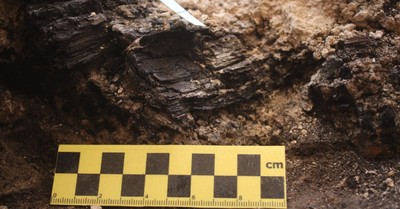
Now, 2,600 years later, archaeologists in modern-day Israel have uncovered massive charred wooden beams from the temple’s destruction in one of the most remarkable biblical archaeology discoveries of the modern era.
The Israel Ministry of Tourism this week announced the discovery, saying the beams were uncovered during excavations at the Givati Parking Lot conducted by the Israel Antiquities Authority and Tel Aviv University within the Jerusalem Walls National Park. The temple, the news release said, collapsed due to the intense fire – and the beams likely were preserved for 2,600 years thanks to plaster that melted from the building's walls and sealed the wood.
The book of 2 Kings 25 provides details of the attack, stating that the Babylonian military commander Nebuzaradan “set fire to the temple of the LORD, the royal palace and all the houses of Jerusalem.” The Babylonians pillaged the most valuable items from the temple, including artifacts made from gold, silver and bronze.
The Israel Ministry of Tourism described it as a “remarkable discovery.”
“The beams appear to have served as the roof of an inner courtyard in a building from the First Temple period,” said excavation director Efrat Bocher. “During the destruction, they collapsed onto the floor. We believe that the plaster cladding of the building's walls, melted by the fire, covered the charred wooden beams, and ultimately enabled their exceptional preservation.”
Bocher added that the discovery “makes you feel that you are witnessing the very moment of destruction, the moment when it all happened.”
“It's deeply moving.”
Johanna Regev of the Israel Antiquities Authority noted it is “very rare” to “find wood with such a large number of growth rings” in Israel.
Bocher, Regev and others surmised that Jerusalem’s residents, once they returned to rebuild the city and temple decades later, may have made a deliberate decision to “preserve the memory of the destruction by leaving behind remains that tell the story of the catastrophe,” the news release said.
“The concept of a landscape of memory is familiar from many cultures around the world,” said Yiftah Shalev, who led the excavation on behalf of the Israel Antiquities Authority alongside Yuval Gadot of Tel Aviv University. “Preserving memory is a human need, seeking to preserve what once existed. Here we see it in its clearest form: a deliberate choice to leave ruins in place as a testament to the destruction and build the new layer over them.”
Photo Credit: ©Israel Ministry of Tourism
Michael Foust has covered the intersection of faith and news for 20 years. His stories have appeared in Baptist Press, Christianity Today, The Christian Post, the Leaf-Chronicle, the Toronto Star and the Knoxville News-Sentinel.
Listen to Michael's Podcast! He is the host of Crosswalk Talk, a podcast where he talks with Christian movie stars, musicians, directors, and more. Hear how famous Christian figures keep their faith a priority in Hollywood and discover the best Christian movies, books, television, and other entertainment. You can find Crosswalk Talk on LifeAudio.com, or subscribe on Apple or Spotify so you never miss an interview that will be sure to encourage your faith.


